Evidence-led patch placement,
through thecross-validation of three clinical systems.
Chiropractic, traditional Chinese medicine, and manual therapy — when all three systems point to the same spot, confidence rises. TAP turns the practitioner's instinct into data you can defend.
Tri-Axial Point
Tri-axial cross-validation — the coordinate where three clinical systems meet. The technical core of the patent claims.
Therapy Adaptive Platform
A universal therapy infrastructure that adapts parameters, placement, and modalities to the patient's response.
Technical name and business vision converge into a single acronym.
One symptom. Three clinical answers. One canvas.
TAP overlays the points each clinical system recommends for the same symptom on a shared body coordinate. Where the three converge — that is your clinical hotspot.
Follow the nerve distribution through spinal segments.
C1 through S4 — 31 spinal segments mapped to 103 treatment codes. When multiple symptoms point at the same segment, the weight compounds, so the engine surfaces the segments your hands would have anyway.
Pin the exact point on the meridian.
14 meridians, 61 acupoints, 218 symptom mappings — running in parallel with axis 1. Acupoints that overlap anatomically with chiropractic segments are flagged, and distal-point suggestions are surfaced automatically.
Trace referred pain back through fascia.
36 trigger points across 7 fascial lines (Anatomy Trains). The engine reverses the referred-pain pattern to find the originator — and lists the 23 known acupoint × TP intersections.
Five minutes from intake to a stimulation sequence.
From symptom entry to therapy guide to session log — the whole loop fits in a phone, one-handed.
Select patient
Code-based login keeps clinic data isolated. Search an existing patient or register a new one in seconds.
Enter symptoms
Search by keyword or tap on the body map directly. Capture the VAS score in the same step.
Safety filter
23 safety rules fire automatically. Absolute contraindications block; relative ones remove the conflicting item; cautions taper the intensity.
AI recommendation
Tri-axial analysis → clustering → 6-channel distribution. Patch numbers land on the body map, and a CDI-ordered treatment sequence is generated.
What the clinician sees — shown verbatim.
This is one screen of the real TAP recommendation engine. Symptom entry, patch placement, treatment sequence, and intensity guidance all on one page.
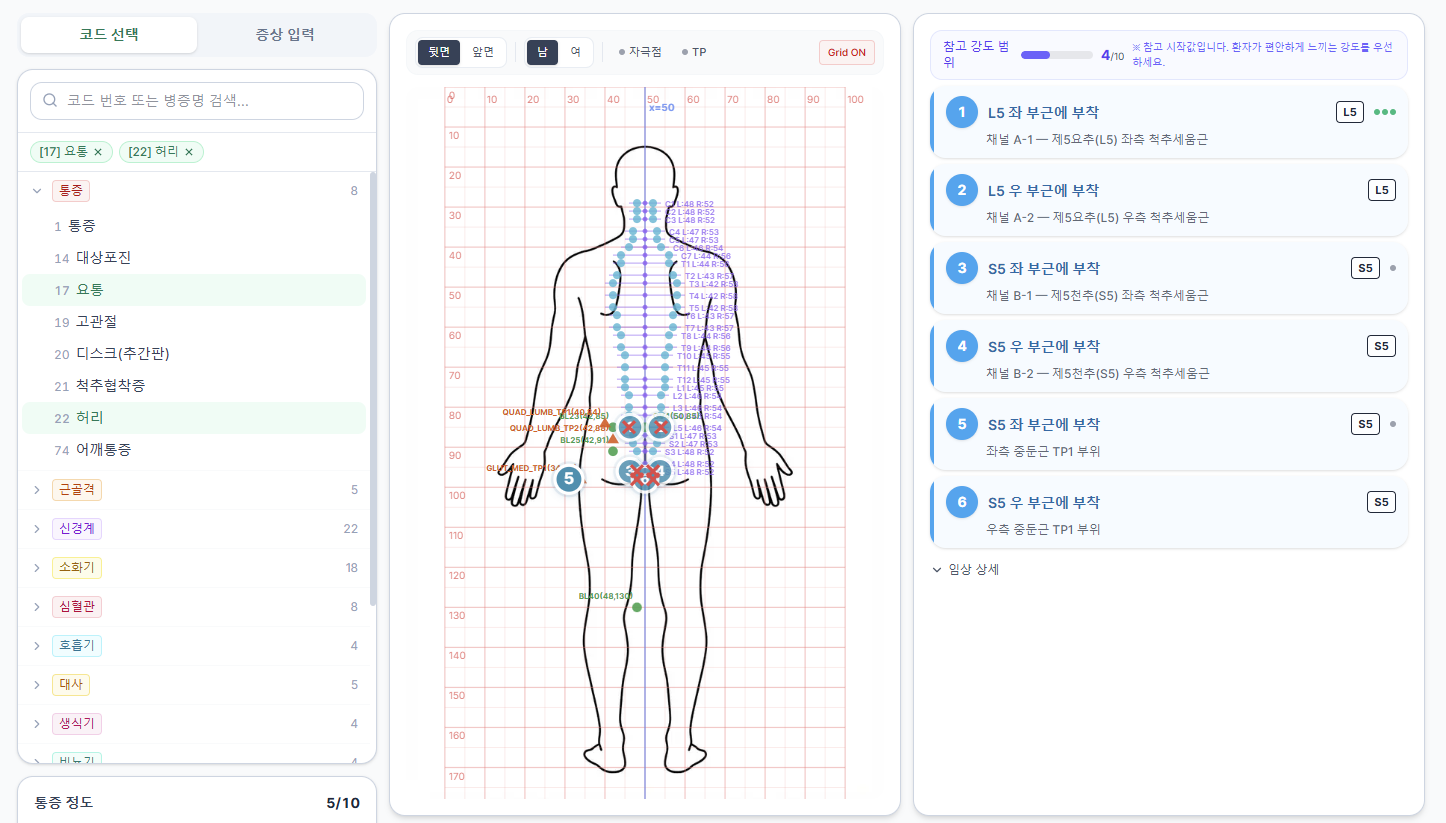
A real product screen — with low back pain (17) + lumbar (22) entered as symptoms. L5·S5 segments and the erector spinae · gluteus medius trigger points were surfaced automatically.
Symptom selection
Search by code or condition name. Multiple symptoms can be combined to compound the weighting.
Tri-axial body map
Cyan dots are TCM acupoints, red X marks are trigger points, the numbered circles are the final patch placements.
Treatment sequence
Each channel's placement, rationale, and related segment, stepped out. The clinician can follow it directly on the device.
Reference intensity
The starting intensity defaults to what the patient can comfortably feel. The safety filter sets the upper bound.
Sits on the hardware you already have.
TAP doesn't force a device. From PainFree 8800 to a stock 4-channel TENS, channel allocation maps itself.
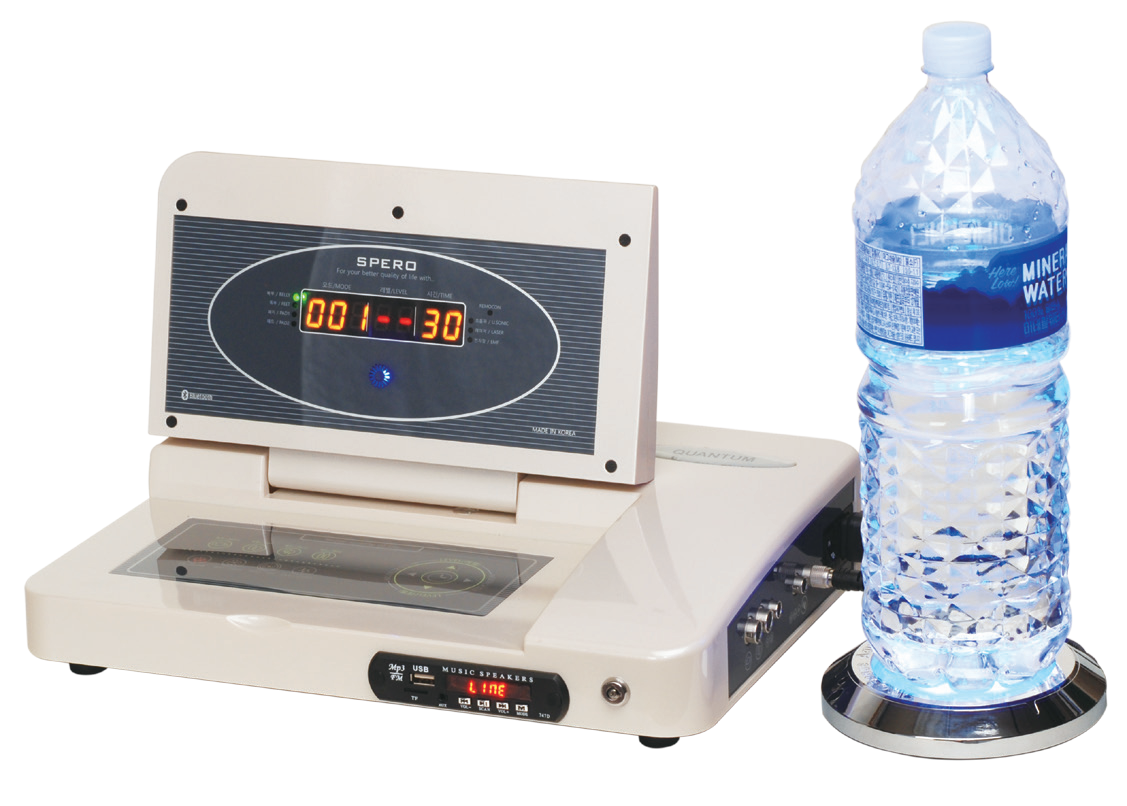
PainFree 8800
TAP's reference device. Channels 0–5 auto-mapped; hotspot clustering recommends the patch coordinates.
Medical 6CH
Clinic-grade dual-patch mode. CH1–3 focal, CH4–5 supportive, CH6 dedicated pain.
Multimodal
Four modalities sequenced into a 60-minute protocol — each with its own safety filter.
Generic TENS
Any standard TENS unit. The engine downscales the placement plan based on available channels and priority.
Clinical responsibility, technically reinforced.
TAP is a clinical reference, not a medical device. But the safety rules run at a medical-device level of seriousness.
Add the weight of data to your clinical judgement.
Fourteen days of every Professional feature, no credit card. Bring your existing patient data over and generate your first recommendation in under thirty minutes.